
Why We Use Media for Learning
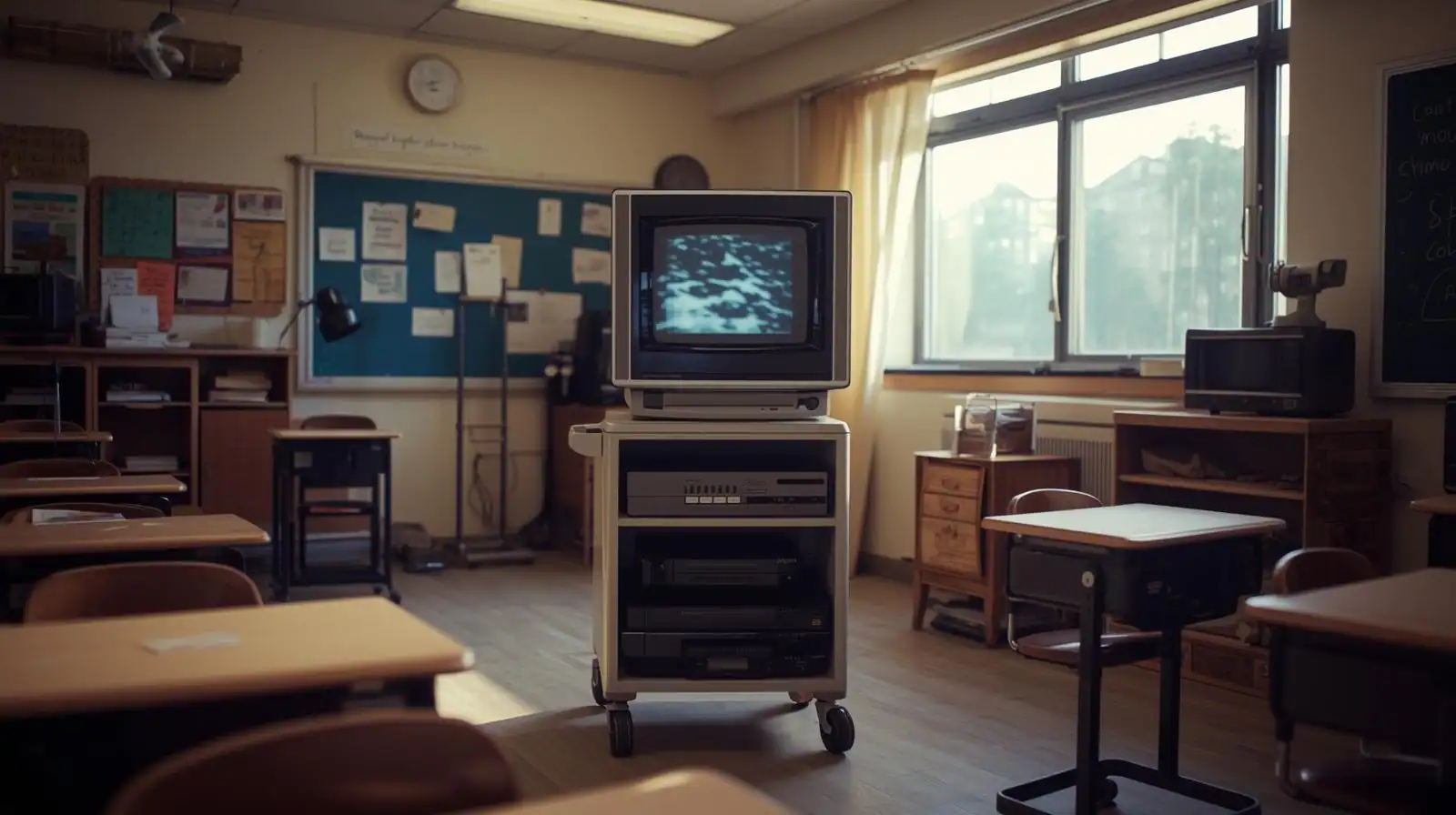
I remember the days when the squeaky wheels of the TV cart would roll down the hall into our schoolroom. Those were some of my favorite school days—no worksheets, no lectures that made me zone out—just Bill Nye the Science Guy or Ms. Frizzle rolling in to teach us science for the day. Or maybe Schoolhouse Rock would pop up, teaching me “Conjunction Junction, What’s Your Function?”
Even now, as an adult, I love watching TV to learn something new or test my knowledge through movies. My favorite moments are when my kids ask how I know so much—or when my husband teases me about all the random facts I remember.
Slowly, I realized my kids could have the same opportunities—but in a modern way. We can stream almost anything for educational purposes. National Geographic, for example, is an incredible tool for teaching science or geography.
Of course, I had my hesitations. I didn’t want my kids to become “iPad babies.” While some educational apps are fun, I wasn’t so sure about TV at first. Most of the time, my kids weren’t interested in what I watched—they thought it was boring. But over time, curiosity crept in. When I introduced them to Bill Nye, they loved his quirky skits that make learning fun and entertaining.
Deciding what counts as “educational” isn’t always straightforward. Some shows or movies are obvious. Others are more subtle. For example, Fiddler on the Roof was a childhood favorite of mine. Beyond the family drama and singing, it’s a glimpse into culture and history—a way to learn without even realizing it.
One of my favorite experiences was showing my boys Bill Nye’s planets episode. They were confused when he mentioned nine planets. My oldest said, “Mom, Pluto isn’t a planet; it’s a dwarf planet.” As a millennial, I had to sigh and say the foreboding words: “Back in my day… Pluto was a planet.” The laughs and conversation that followed even inspired us to make “Pluto Never Forget 1930–2006” shirts for our trip to the Kennedy Space Center.
Examples & Favorites
Here are a few of our family favorites that have sparked curiosity and learning:
- The Magic School Bus – Perfect for science lessons. It encourages kids to explore beyond what I can teach and is entertaining enough to keep them engaged.
- Mr. Peabody & Sherman – This historical adventure series combines fun with history lessons, timelines, and lots of dad jokes.
- The Unexplained – Great for older kids (like my 11-year-old) to explore conspiracy theories and critical thinking. It opens their minds to questioning science and history in different ways.
Sometimes, we follow up with hands-on activities: science experiments outside, trips to the library, or creating mini-projects inspired by what we watched. These activities make the learning stick.
The Free Printable List
I’ve compiled a full checklist of educational movies, TV shows, and YouTube channels that we love or plan to watch. It’s organized by subject—science, history, literature—and includes notes for content that may need parental guidance.
The list isn’t a strict curriculum—it’s meant to be flexible. Print it out and check off what you’ve watched. Use it as a supplement to your homeschool, for rainy days, or as inspiration for exploring new topics.
Parental guidance: Most shows are kid-friendly, but each parent knows what’s best for their child, especially for YouTube content. Some movies may require discretion.

Subscribe and Download the Free Printable Checklist Here
Tips for Making Screen Time Educational
Watching isn’t enough on its own. Here’s how we make screen time count:
- Discussion: Ask questions after watching to see what stuck. You’ll be surprised by what kids remember and how they interpret it differently.
- Hands-on learning: Combine watching with experiments, crafts, or games. For example, Klaus loves Numberblocks while building with magnet tiles, recreating the math problems he sees. Science experiments from shows like Emily’s Wonder Lab can also be a lot of fun.
- Balance: We aim for about an hour of educational TV or apps, followed by screen-free playtime or reading. A typical day might include an hour of educational TV, an hour of educational computer games, an hour of playtime, and an hour of video games before dinner.
- Choosing new shows: I always watch first. Age recommendations aren’t enough—content matters. Shows that include rude or negative behavior often lead to kids re-enacting them, so I review anything new first. My kids can suggest shows by writing them on a post-it note, which I’ll review when I have time.
If you’re looking for more screen-time educational options, I’ve got a full post on my favorite learning apps and tools—check it out here!
Wrap-Up & Call-to-Action
I’ve done a lot of the research so you don’t have to—this free printable is a shortcut to fun, educational screen time for your homeschool.
I’d love to hear from you! Share your favorite educational shows in the comments, or tell me about any we’ve missed—I’m always looking to learn new things too.
Stay tuned for more posts about life skills kids should learn before leaving home and budget-friendly homeschooling tips.
Subscribe and Download the Free Printable Checklist Here


P.S. Around here, screen time isn’t just about surviving the day — it’s about learning, laughing, and finding joy in unexpected places. That’s exactly the spirit behind my book Schooling at Home with Nerds: Stories of chaos, creativity, and choosing joy in homeschool life. If you’ve ever wondered how chaos and creativity can go hand in hand, you’ll love it. [Check it out here ➜]
As an Amazon Associate, I earn from qualifying purchases.
This post may contain affiliate links. If you click one and make a purchase, I may earn a small commission at no extra cost to you.