
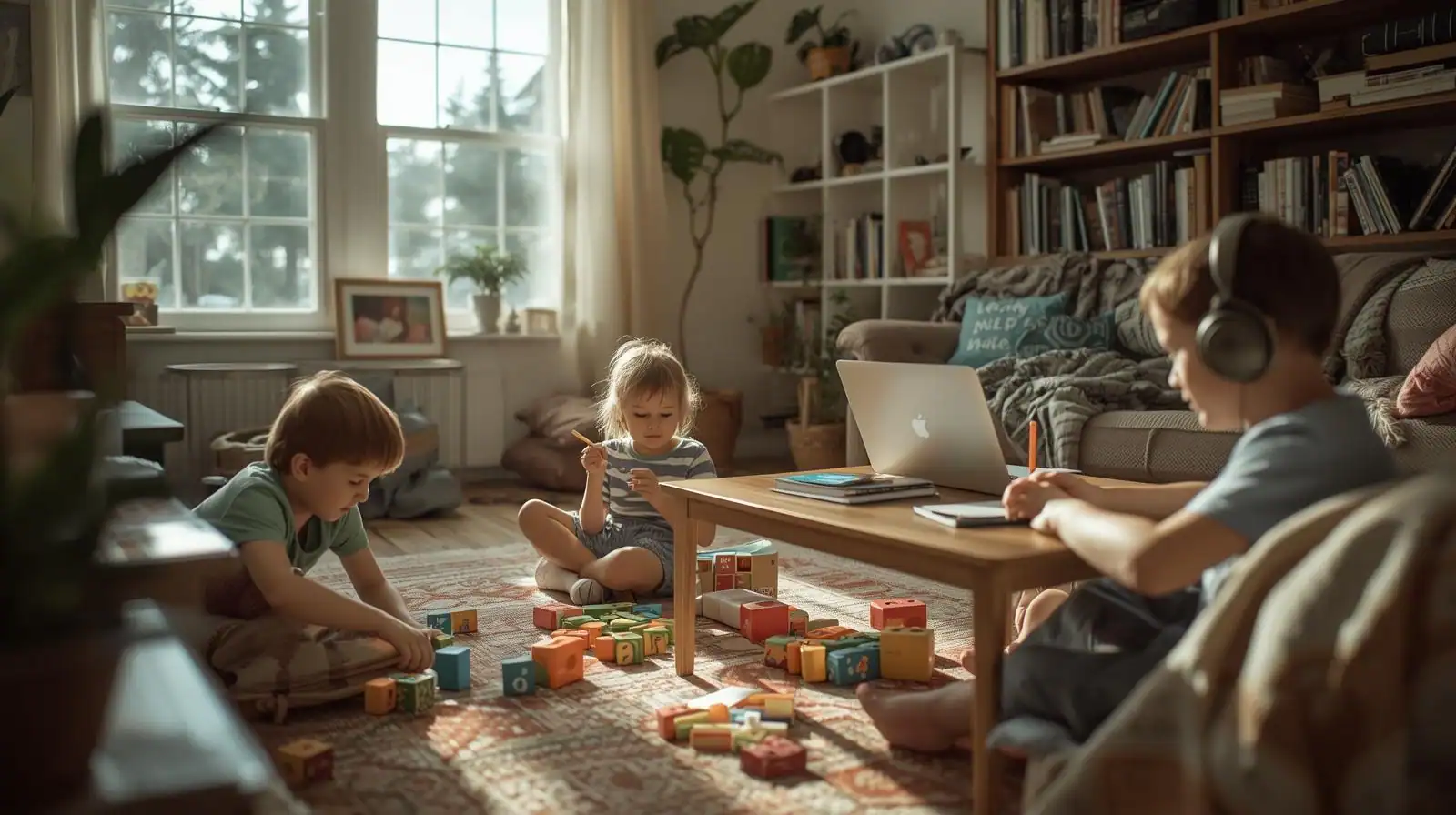
Homeschool Curriculum Types (Explained Simply)
One of the biggest questions new homeschoolers ask is, “What curriculum style should we use?” And the truth is… there’s no one-size-fits-all answer. Kids learn differently, families function differently, and sometimes the method that works beautifully this year will fall flat on its face next year—and that’s completely normal.
Below is a simple, conversational breakdown of the most common homeschool approaches, what they’re like in real life, and how you might know if they’re a good fit.
Homeschool Styles Explained (In Real-World Language)
Traditional / School-at-Home
This style looks the most like what you’d find in a public classroom—textbooks, worksheets, lesson plans, and a set schedule. It’s structured and familiar, which can be comforting, especially when you’re just getting started.
Classical
Classical education is built around the “trivium”—three stages: grammar (learning the basics), logic (learning how to think about information), and rhetoric (learning how to communicate that information well). It leans heavily on history, language, and deep thinking. If you love ancient civilizations, Latin, and the idea of raising little philosophers, this might speak to your soul.
Charlotte Mason
This approach is gentle and nurturing, focusing on “living books” (engaging stories instead of dry textbooks), time outside, nature study, narration, and forming good habits. Think cozy reading, journaling under a tree, and treating children as whole people—not just minds to be filled.
Montessori
Child-led, hands-on learning with real tools and self-directed exploration. Montessori kids get to follow their interests and learn at their own pace, often through tactile experiences. If your child thrives when left to explore and “do it themselves,” Montessori might be a good fit.
Unit Studies
Pick a topic—Egypt, space, sharks, the American Revolution—and learn everything through that lens. Science, history, writing, reading… all woven together in one big theme. This approach can be magical for curious, engaged learners and families who enjoy learning together.
Unschooling
Unschooling is the “follow the child” lifestyle. There are no set lessons—kids learn naturally through interests, questions, and real-life experiences, with the parent as a guide and resource-gatherer. It’s relaxed and flexible, and for some families, completely freeing.
Eclectic
If you’ve ever grabbed a little of this, a little of that, tossed in some games, a dash of YouTube, a workbook here and there, and sprinkled structure only where needed—congrats, you’re eclectic. This is the “build-your-own” homeschool approach, and honestly, most of us end up here eventually.
Waldorf
Waldorf blends academics with hands-on creativity, storytelling, art, and movement. It tends to delay academics until kids are developmentally ready and values imagination, rhythm, and a slow childhood.
Online School
Some families use online programs ranging from a few virtual classes to a complete digital school experience. Great for visual learners, kids who like screens, or families who need more structure without being fully hands-on.
Project-Based Learning
Learning happens through big, meaningful projects—building something, researching a passion topic, planning an event, solving a real-world problem. Kids learn by doing and thinking deeply.
Gameschooling
My personal favorite! Using board games, video games, card games, and tabletop games to teach skills and make learning FUN. Strategy, reading comprehension, math, creativity, problem-solving—games do more than most people realize.
We personally use an eclectic gameschooling approach—and if you want to see some of the games we use, I have a post that lists several to get you started. Read about it here.
Which Types Work Best for Which Ages?
Honestly? That depends on your child. And the best advice I can give is: watch them. Pay attention to how they play—that alone will tell you a lot about how they learn. I wish I had done this in the beginning maybe if I had paid attention to my little ninja warriors I would have known that laying on quilts reading living books wasn’t going to work well.
When Charlotte Mason didn’t work we started with a Classical approach because the structure and repetition worked beautifully for my kids… until one day it didn’t. And that’s completely fine. You can pivot and shift as many times as you need. This is homeschool—you’re allowed to customize.
We’ve tried:
- Charlotte Mason
- Unit Studies
- Classical
- Montessori influences
- Online learning
…and eventually found our groove with eclectic gameschooling.
If you want the whole wild story, I tell it in my book Schooling At Home with Nerds: Stories of Chaos, Connection, and Choosing Joy in Homeschool Life. Trust me—we’ve been through it all.
As an Amazon Associate, I earn from qualifying purchases.
This post may contain affiliate links. If you click one and make a purchase, I may earn a small commission at no extra cost to you.
How Do I Know What Style Fits My Child?
There are plenty of quizzes online that can help you get started:
Treehouse Schoolhouse
Made2Homeschool
Jones Heart & Home
Learn Together Lowcountry
These are fun, but keep in mind—most quizzes are based on your personality and preferences. And while your learning style matters… your child’s matters MORE.
For example, I desperately wanted to be a Charlotte Mason mom. I love literature, quiet time, nature notebooks… my boys, however, had a very different plan.
We moved through Unit Studies, then Classical, which worked for a while. But once we hit the logic stage, it fell apart. Eventually, I took what worked, tossed what didn’t, honored what my kids were naturally drawn to, and added games to make it enjoyable.
One day, I’d really love to create a quiz that helps parents figure out their child’s learning style—not just their own.

Sign up for my newsletter to be the first to know when the quiz is ready!
Can You Combine Styles?
Yes. Absolutely. You can mix, match, throw out, rebuild, and adjust anytime you need to. Your homeschool can look like a Picasso painting and still work beautifully.
In our home:
- My youngest is 100% Montessori-driven. Give him space, tools, and freedom, and he learns like a rocket. He even does math for fun (insert dramatic shudder). One day he’s adding magnetic tiles, the next he’s filling a whiteboard with equations like a tiny math scientist.
- My middle son needs movement and hands-on learning. Sitting still, listening to lectures, or filling out worksheets simply doesn’t work. Gameschooling, STEM projects, and tactile learning are his sweet spot.
- My oldest is a visual learner with APD, so reading or listening doesn’t help him absorb information. Video-based online learning works far better, and documentaries and movies are our go-to supplements.
The longer I homeschool, the more I realize—your homeschool should fit your children, not the other way around.
Where Can I Learn More?
A few places to start:
- HSLDA has a great breakdown of styles
- Pinterest is a treasure trove of ideas and visuals
- If you’re curious about gameschooling, check out my earlier post on the games we use in our homeschool
Final Thoughts
There is no wrong way to homeschool—and you don’t have to pick one lane and stay in it forever. Explore, experiment, observe, and adjust. Your family’s homeschool journey is allowed to evolve just like your kids do.