
Everyday Learning
This one is dear to my heart because of everything we’ve gone through over the years. If you’ve read my book Schooling at Home with Nerds: Stories of chaos, creativity, and choosing joy in homeschool life, you already know about many of our homeschool trials and errors that led us to where we are today.
As an Amazon Associate, I earn from qualifying purchases.
This post may contain affiliate links. If you click one and make a purchase, I may earn a small commission at no extra cost to you.
Learning doesn’t have to look like “school” — and, to risk stepping on a few toes, it doesn’t have to look like kids running around outside on nature walks or making mud pies either. Those things are wonderful and worth doing, but they’re not the only ways learning happens. Let me take you on a journey through what learning looks like in our home.
The “Lazy Day” That Isn’t
Let’s start with what I call one of our lazy days. Days like today, while I’m writing this post, may look lazy from the outside. But truthfully, they’re just days bogged down by busy schedules or emotions running high — days when formal schoolwork simply isn’t going to happen.
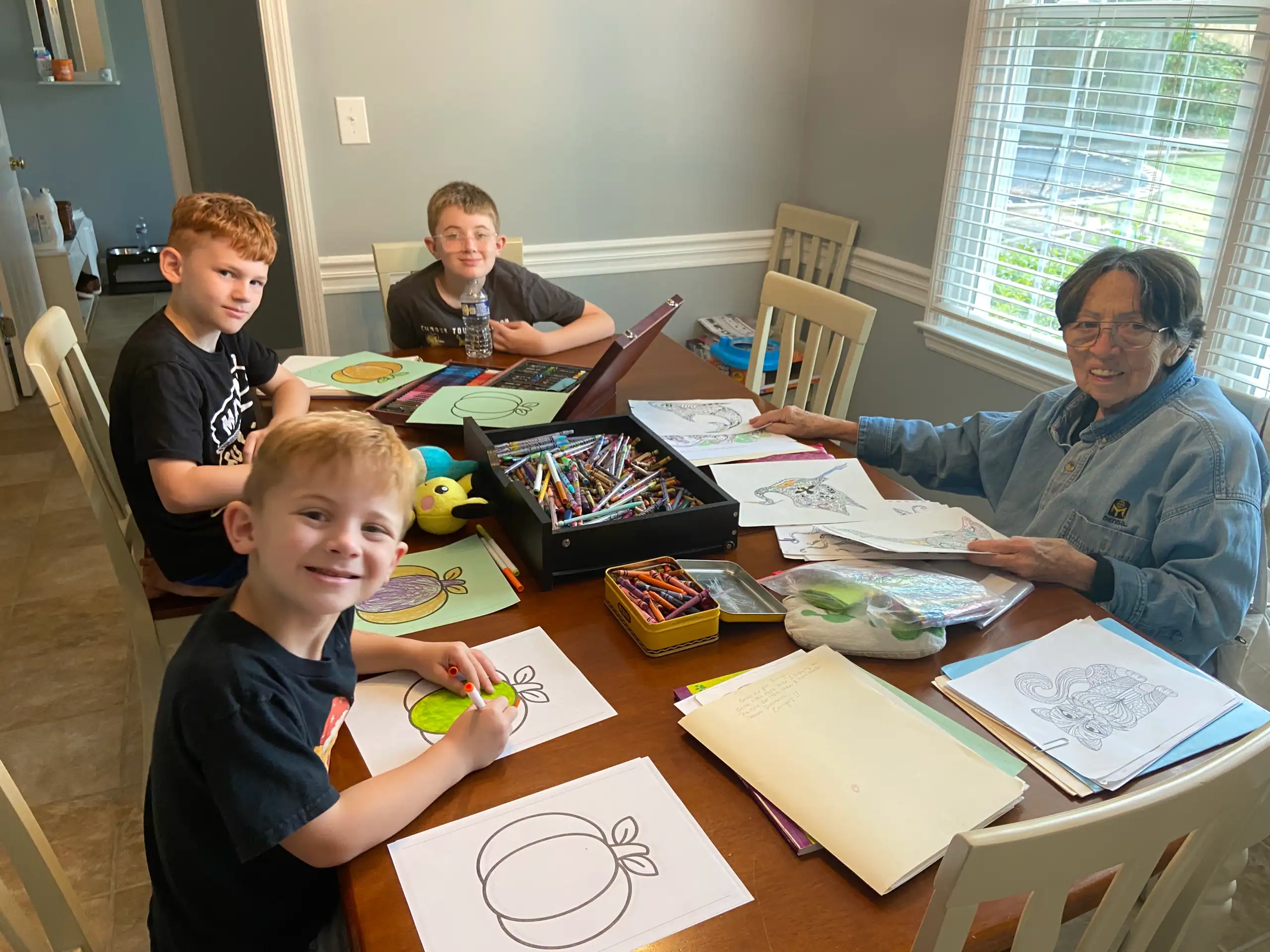
Right now, my kids are huddled in the living room. Two are spread out on the floor surrounded by paper and art supplies, and my oldest is curled up in the recliner watching MythBusters. It might not look like learning, but stay with me — there’s more happening than meets the eye.
This morning started when my middle child came bounding into my room, bright-eyed and bushy-tailed, asking if he could go outside to wave at the men who pick up our trash. As annoying as it was to be woken up before my alarm, I love the relationship my kids have built with these strangers.
Finding Lessons in Everyday Moments
They wave, the workers wave back, and before long, one of the men grabs the basketball that’s always sitting by the curb. The crew takes a few quick shots while my kids cheer them on. Lesson learned? You can find joy and connection in any job.
As the truck pulls away, the driver honks the horn, and everyone bursts into laughter and excitement. This little ritual has been going on for years — long enough that now my kids bake and give them boxes of our special Christmas cookies during the holidays.
After breakfast, I load up the van to take our recycling to the center. Sometimes the kids tag along. Lesson: going green — learning what’s recyclable, what’s not, and how to reduce plastic waste.
By the time I get home, I’ve got about an hour before taking one of the kids to a therapy session. That’s why the others are piled in the living room watching TV and doing art. There’s no time for traditional schoolwork today, but learning still happens through their interests.
After therapy, it’s already 12:30. We get home, eat lunch, and suddenly it’s 1:30. Since it’s Tuesday, my younger two have Ninja Warrior training at 4:00, which means we leave by 3:30. That gives me just two hours — and of course, the kids don’t want to lose their one hour of video game time.
So I have a choice:
- Say no, pull out the schoolwork, and fight through tears and frustration, or
- Let them do a review on Education.com before their Minecraft hour.
I chose option two. It may seem lazy to some, but it works for us — and there are hidden lessons in every bit of this “chaos.”
Learning Without a Lesson Plan
Let’s move to another kind of everyday learning — learning without a plan.
Take the grocery store, for example. What could you possibly learn there? Quite a lot, actually.
- Identifying items – fruits, vegetables, types of pasta, and other products.
- Budgeting – real-world math! My kids see firsthand how much it costs to feed a family of six.
- Social interaction – this is socialization at its finest. They learn how to interact respectfully with adults, cashiers, and strangers.
Living in the South, everyone talks to everyone. My kids learn how to respond politely, hold a conversation, and understand cultural differences — like why someone says, “Bless your heart.”
The grocery store often sparks curiosity too: Where does this come from? How is it made? Is it healthy? Why does it cost so much? These are real questions that lead to real learning.
Even the doctor’s office can spark lessons. Why do we need shots? Why do they take blood? Why do they measure weight? Learning happens everywhere — our job as parents is to recognize those teachable moments.
Learning in Unexpected Places
One of the most unexpected learning experiences came when we visited my dad in Alaska. He lives in a tiny town — one grocery store, three gas stations, a laundromat, and a welcome center along a long stretch of highway.
My kids, who grew up in the city, had to adjust to life in the woods. No TV. No constant entertainment. Just four-wheelers, rocks, sticks, and imagination. They learned to find fun in unexpected ways and discovered how others live without city conveniences. We even had to haul our own water for dishes and showers — a huge eye-opener!
Another place full of learning is at their great-grandparents’ house. My grandparents live out in the country and grow their own food. The kids help pick vegetables for dinner, play in the dirt, and swing from tree branches. My grandfather teaches them games like checkers, poker, and blackjack — sneaky math lessons in disguise.
Recently, a family member with dementia stayed with us for a week. That experience taught my kids compassion, patience, and curiosity about aging and memory. They asked about Alzheimer’s, why it happens, and what can be done. Watching The Price Is Right — comparing Bob Barker’s days to Drew Carey’s — even became a mini economics and history lesson about inflation and time.
Finding Learning in Everyday Life
As parents, it’s easy to overlook learning when it doesn’t look academic. Homeschool parents especially worry about keeping up with public school benchmarks. But our kids don’t have to be “on par” — they have the opportunity to experience life and learn the way adults do.
Every week, I budget for groceries, talk with strangers, take care of elders, and look up information when I need it. That’s real learning — the kind that lasts.
We need to remember the same for our children. Yes, they should learn foundational skills, but it’s OK if they don’t know everything.
Take a step back and really look at your kids. What could they be learning today that isn’t written in a lesson plan?
I hope you find joy in discovering those hidden lessons — in the lazy days, the busy days, and the beautifully ordinary ones.